

What are NAD+ injections? A plain-language guide
NAD+ is a molecule every cell uses to turn food into energy, and levels fall with age. NAD+ injections are a prescription form of it, given as a small shot under the skin. What it is, how the shots compare with IV drips and supplements, and what the research shows so far.

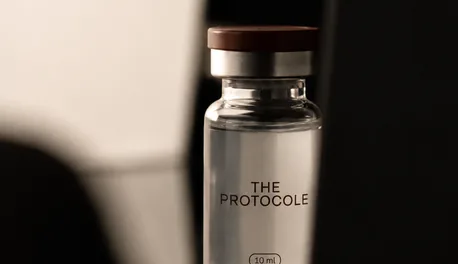
NAD+ is a molecule every cell in your body uses to turn food into energy and to keep its repair systems running. You make it yourself, and the amount you make falls as you get older. NAD+ injections are a prescription form of the same molecule, given as a small shot just under the skin, usually at home. People come to them for energy and for healthy aging, and the honest answer about what the shots do sits in the research section below: the biology is solid, the human studies are still small.
What is NAD+?
Nicotinamide adenine dinucleotide, which is why everyone says NAD+. Dr. Humaira Ali gives the short version.
"Think of it as the big coenzyme behind energy production in your body."
The longer version: it's a coenzyme, a helper molecule that lets enzymes do their jobs. Two of those jobs matter most here: moving energy out of the food you eat, and running the proteins that repair cells and respond to stress. Your body builds NAD+ from vitamin B3 and from the food you eat, uses it constantly, and makes more. The catch is that levels decline with age in tissue after tissue, in animals and in people, which is why NAD+ became a topic in longevity research.
What are NAD+ injections?
A prescription. A licensed pharmacy prepares NAD+ as an injectable solution for your prescription, and you inject a small amount under the skin, the same way many peptides are given. It isn't a vitamin shot from a wellness bar and it isn't a supplement capsule: it's the molecule itself, as a prescription medicine, with a clinician deciding whether it's right for you first.
At The Protocole, that means you meet a clinician live or complete an intake on your own, a doctor reviews everything and makes the prescribing decision, and if NAD+ is prescribed, the pharmacy prepares it and ships it to you with an injection guide. If you've never given yourself an injection, read how to inject peptides at home, step by step first. The NAD+ we offer is described on its product page.
Injections, IV drips or supplements: what's the difference?
All three are ways of getting more NAD+, or the ingredients for it, into the body. They differ in how they get there and in how much is known about each.
| Form | What it is | How you get it | What the research shows |
|---|---|---|---|
| NAD+ injection | NAD+ itself, injected under the skin | By prescription, usually at home | Few human studies of injections specifically |
| NAD+ IV drip | NAD+ itself, infused into a vein over hours | At a clinic | A small pilot study of a six-hour infusion; see below |
| Oral precursors (NR, NMN) | Building blocks the body turns into NAD+ | Over the counter, as supplements | Small trials show higher NAD+ in blood cells; see below |
Dr. Ali's comparison comes down to how much gets in, how fast, and at what cost in side effects.
"IV delivers the most NAD+ straight into the blood, but it causes the most side effects: nausea, cramping, chest tightness. It has to be given slowly. A shot under the skin is expected to absorb more slowly, with milder effects and lower blood levels, though this hasn't been measured in studies. Swallowed NAD+ itself is mostly broken down in the gut. Oral precursor supplements like nicotinamide riboside do raise NAD+ in the blood, but they haven't been shown to raise it in muscle or to reliably make people feel or function better."
Is NAD+ a peptide?
No. Peptides are short chains of amino acids. NAD+ is a coenzyme built from a vitamin, a very different kind of molecule. It gets grouped with peptides because it's also a prescription injection and often sits on the same menu. If you want the longer answer on peptides, read what peptides are.
What does the research show?
Three things are well supported, and one big thing isn't yet.
NAD+ declines with age. A 2021 review in Nature Reviews Molecular Cell Biology summarizes evidence from animals and humans that NAD+ levels fall in many tissues as we age, and that this decline is tied to the cell's energy and repair pathways. That's the biological case for paying attention to NAD+.
Oral precursors raise NAD+ in the blood. In a 2018 trial in Nature Communications, healthy adults aged 55 to 79 took nicotinamide riboside, a form of vitamin B3, for six weeks. Twenty-four people completed it. NAD+ in their blood cells rose by about 60 percent compared with placebo, and the supplement was well tolerated. Blood pressure and artery stiffness trended better but weren't statistically significant, and the authors called for larger trials.
NAD+ infusions can be given without immediate problems, in a very small study. A 2019 pilot in Frontiers in Aging Neuroscience gave eight healthy men a six-hour intravenous NAD+ infusion and three others saline. No adverse events were observed. One surprise: NAD+ in the blood didn't rise until after the two-hour mark, which suggests the body clears or takes up infused NAD+ quickly. Eleven people is a very small study, and it measured blood chemistry, not how anyone felt or functioned.
What isn't shown yet. There are no large, well-controlled trials of NAD+ injections showing that they improve energy, aging, performance or anything else you'd notice in daily life. That's the gap, and anyone who tells you otherwise is ahead of the evidence. It's also why NAD+ is prescribed after a conversation with a clinician about your goals, rather than sold as an answer. Dr. Ali draws the line in the same place.
"What it shows is at the cell level: more ATP, more repair, more out of your mitochondria. What it doesn't show is anything long term. Three months after you stop, is the effect still there? We don't know yet."
How is NAD+ regulated?
There is no FDA-approved NAD+ injection. NAD+ injections are compounded: a licensed pharmacy prepares them for an individual prescription, and FDA doesn't review compounded medications for safety or effectiveness before they're dispensed. FDA keeps a list of substances that pharmacies may use in compounding while the agency evaluates them, and nicotinamide adenine dinucleotide is on it in the group FDA calls category 1. That status is interim, and FDA can change it. Regulatory status as of October 27, 2026.
Important safety information
Because there is no FDA-approved NAD+ injection, there is no FDA label listing its side effects. What's known comes from clinical experience and small studies.
- Where you inject, some redness, tenderness or a small bump can happen, as with any injection under the skin. If redness or swelling spreads, feels warm, or comes with a fever, call your prescriber the same day.
- Feeling warm, palpitations, nausea or lightheadedness can happen, and they're more common with IV drips than with injections under the skin. If palpitations or nausea last more than 10 to 15 minutes after an injection, call your prescriber.
- Trouble breathing, swelling of the face, lips, tongue or throat, or a rash that spreads fast means call 911.
Who this isn't for
NAD+ hasn't been studied in pregnancy or while breastfeeding, so it isn't prescribed then. Tell your prescriber about every medicine and supplement you take, any heart or liver history, and anything else in your health history before starting. Dr. Ali adds one more group.
"If you have cancer now, have had cancer, are getting chemotherapy or other cancer treatment, have an abnormal cancer screening result or a growth being monitored, or carry an inherited cancer risk, you need your physician's clearance first. NAD+ helps cells multiply, and in theory that includes the wrong cells."
How do you get NAD+ injections?
The same way you get any prescription: a clinician reviews your health history and goals and decides whether NAD+ makes sense for you. At The Protocole, that review happens online or on a call, a doctor makes the prescribing decision, and your prescription ships from the pharmacy with everything you need to take it at home. Your prescriber sets how much and how often, and both are on your label.
Keep reading


Reviewed by Dr. Humaira Ali, board-certified in Emergency Medicine and EMS on 2026-11-01. Regulatory status as of 2026-10-27. General education, not medical advice. Always follow your prescriber's instructions.
Telehealth services for members of The Protocole are provided by Arora Health & Aesthetics, LLC, an independent medical practice, through licensed healthcare providers in the states where they are authorized to practice. [counsel confirm]
Compounded medications are not FDA-approved. Report side effects to your prescriber and to FDA MedWatch.
Dr. Humaira Ali
Dr. Humaira Ali is a board-certified physician in Emergency Medicine and Emergency Medical Services and a former Columbia University faculty member. Interviewed October 27, 2026.
The Protocole editorial team
Written and edited by The Protocole editorial team.
Sources
- Covarrubias AJ, Perrone R, Grozio A, Verdin E. NAD+ metabolism and its roles in cellular processes during ageing. Nature Reviews Molecular Cell Biology, 2021;22(2):119-141. PMID 33353981. https://pmc.ncbi.nlm.nih.gov/articles/PMC7963035/
- Grant R, Berg J, Mestayer R, et al. A Pilot Study Investigating Changes in the Human Plasma and Urine NAD+ Metabolome During a 6 Hour Intravenous Infusion of NAD+. Frontiers in Aging Neuroscience, 2019;11:257, published 2019-09-12. doi 10.3389/fnagi.2019.00257. https://pmc.ncbi.nlm.nih.gov/articles/PMC6751327/
- Martens CR, Denman BA, Mazzo MR, et al. Chronic nicotinamide riboside supplementation is well-tolerated and elevates NAD+ in healthy middle-aged and older adults. Nature Communications, 2018;9:1286. PMID 29599478. https://pmc.ncbi.nlm.nih.gov/articles/PMC5876407/
- FDA, Bulk Drug Substances Used in Compounding Under Section 503A of the FD&C Act, content current as of 2026-05-14. https://www.fda.gov/drugs/human-drug-compounding/bulk-drug-substances-used-compounding-under-section-503a-fdc-act
- FDA, Bulk Drug Substances Nominated for Use in Compounding Under Section 503A (category lists), 2026-05-14 (copy saved 2026-10-20, data/compliance/sources.tsv S2). https://www.fda.gov/media/94155/download
- FDA, Human Drug Compounding, content current as of 2026-06-15. https://www.fda.gov/drugs/guidance-compliance-regulatory-information/human-drug-compounding
- FDA, MedWatch: The FDA Safety Information and Adverse Event Reporting Program, content current as of 2026-10-21. https://www.fda.gov/safety/medwatch-fda-safety-information-and-adverse-event-reporting-program


 Text support